
 Many homeowners assume a garage door is simply an entry point for vehicles. As long as it opens and closes properly, they rarely think about what the door is made of or how it affects the rest of the home.
But during Atlanta summers, when garage temperatures can climb well above outdoor temperatures, many homeowners start asking a different question: Is an insulated garage door necessary?
The answer depends on how your garage is used, how your home is built, and what level of comfort and efficiency you expect. For some households, a standard garage door works perfectly well. For others, insulation can make a noticeable difference in temperature control, noise reduction, and long-term energy performance.
Understanding the difference can help you make a better decision before replacing or upgrading your garage door.
What Makes a Garage So Hot in the First Place?
Garages often become one of the hottest areas of a home during the summer.
The main reason is simple: garages absorb heat from multiple sources throughout the day. Sunlight strikes the garage door, exterior walls, and roof. Those surfaces store heat and gradually release it into the garage space.
If you’ve ever wondered what causes extreme garage temperatures during Atlanta summers, the combination of high humidity, strong sunlight, and extended heat waves creates ideal conditions for heat buildup.
An uninsulated metal garage door can act like a large heat conductor. As outdoor temperatures rise, the door transfers that heat directly into the garage.
The result is a space that may feel dramatically warmer than the outside air.
What Is an Insulated Garage Door?
An insulated garage door contains insulating material between layers of steel, aluminum, or other construction materials.
Common insulation types include:
- Polystyrene panels
- Polyurethane foam insulation
- Composite insulation systems
These materials help slow the transfer of heat between the outside and inside of the garage.
If you’re unsure whether your current door already has insulation, understanding the common signs of an insulated garage door can be helpful before making changes.
Does Every Garage Need an Insulated Door?
Not necessarily.
One of the biggest misconceptions is that every garage automatically needs insulation.
In reality, insulation needs vary from home to home.
A Standard Garage Door May Be Fine If:
- The garage is detached from the home
- The space is used only for vehicle storage
- You rarely spend time in the garage
- Temperature swings don’t affect nearby living areas
In these situations, a standard garage door may provide everything you need.
Insulation May Be More Valuable If:
- The garage is attached to the house
- Bedrooms sit above the garage
- The garage shares walls with living spaces
- The space is used as a workshop, gym, or hobby area
- Stored items are sensitive to heat or cold
The more connected your garage is to daily life, the more noticeable insulation benefits become.
How to Know If Your Garage Needs Insulation
Many homeowners aren’t sure whether their situation justifies the added investment.
A few signs can help answer the question.
Your Garage Feels Unbearably Hot
If stepping into the garage during summer feels like entering an oven, poor insulation may be contributing to the problem.
Rooms Near the Garage Are Difficult to Keep Comfortable
Heat transfer doesn’t always stay inside the garage. Attached garages can affect nearby rooms, making cooling systems work harder.
You Use the Garage Frequently
A garage that doubles as a workspace, home gym, storage area, or hobby room often benefits from better temperature control.
Energy Bills Are Rising
While garage door insulation alone won’t solve every efficiency problem, it can be one piece of a broader effort to reduce heat transfer.
Does Garage Use Affect Insulation Needs?
Absolutely.
The way you use the space often determines whether insulation is worthwhile.
Vehicle Storage Only
If your garage primarily shelters vehicles and sees little activity otherwise, insulation may be less important.
Workshop or Hobby Space
Many homeowners use garages for woodworking, crafting, repairs, or fitness equipment.
In these cases, temperature control becomes more valuable because people spend extended time in the space.
Storage Area
Heat-sensitive items such as paint, electronics, holiday decorations, and household supplies may benefit from a more stable environment.
What Are the Benefits of an Insulated Garage Door?
Homeowners often focus on temperature, but insulation can provide several advantages.
Better Temperature Stability
Insulation slows heat transfer and helps reduce extreme temperature swings.
Improved Energy Efficiency
Attached garages can influence temperatures in neighboring rooms. An insulated door may help reduce unwanted heat movement.
For homeowners interested in broader efficiency improvements, exploring ways to improve garage door energy performance can provide additional ideas beyond insulation alone.
Noise Reduction
Insulated doors often operate more quietly and help reduce outside noise entering the garage.
Increased Durability
Many insulated doors feature multiple layers of construction, making them stronger and more resistant to dents than single-layer doors.
Better Comfort
For anyone using the garage regularly, reduced temperature extremes can make the space more pleasant year-round.
Understanding Garage Door Insulation Requirements
There is no universal insulation requirement that applies to every garage.
Instead, garage door insulation is often measured using an R-value.
R-value reflects how effectively a material resists heat transfer.
Higher R-values generally provide better insulating performance.
When comparing options, many homeowners want to determine the ideal insulation level for their garage door. The answer depends on:
- Local climate
- Garage usage
- Home construction
- Budget
- Comfort goals
For Atlanta homes, moderate to higher insulation levels are often considered because of the region’s prolonged summer heat.
Can You Add Insulation to an Existing Garage Door?
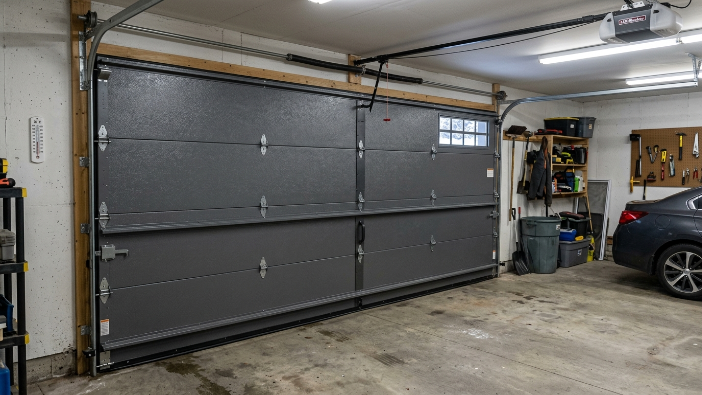 In many cases, yes.
Homeowners don’t always need a full replacement.
Several aftermarket insulation kits allow insulation panels to be installed inside existing doors.
If you’re considering this route, it may help to understand the steps involved in improving garage door insulation before getting started.
However, results vary depending on:
- Door condition
- Door material
- Existing structural strength
- Quality of installation
Older doors may not always perform as well as factory-insulated models.
How Long Does Garage Door Insulation Last?
Quality insulation materials can last for many years.
In most cases, insulation remains effective for the life of the garage door when properly installed and protected from moisture damage.
Factors affecting lifespan include:
- Material quality
- Climate conditions
- Physical damage
- Door maintenance
Homeowners often ask about the expected lifespan of garage door insulation, and the good news is that it typically requires very little maintenance after installation.
Common Mistakes Homeowners Make
Focusing Only on the Door
The garage door is only one part of the system.
Heat can also enter through:
- Roof structures
- Exterior walls
- Windows
- Gaps around doors
Choosing the Highest R-Value Without a Purpose
More insulation isn’t always better.
The ideal insulation level should match your garage’s actual use and climate conditions.
Ignoring Air Leaks
Even a highly insulated garage door can perform poorly if gaps allow outside air to enter freely.
Assuming All Insulated Doors Are Equal
Construction quality varies considerably between manufacturers and product lines.
When evaluating options, it’s useful to understand the key factors involved in selecting an insulated garage door and compare features beyond insulation ratings alone.
How to Pick the Right Garage Door Insulation in Atlanta
Atlanta’s long summers make heat management a priority for many homeowners.
When selecting insulation, consider:
- Whether the garage is attached or detached
- Daily garage usage
- Sun exposure
- Existing insulation throughout the home
- Budget and long-term goals
If you’re specifically researching local conditions, understanding which insulation options perform best in Atlanta weather can help guide your decision.
The best choice isn’t always the most expensive option. It’s the one that aligns with how your garage functions in everyday life.
Expert Perspective
Garage door insulation is often viewed as an upgrade rather than a necessity.
In reality, its value depends entirely on the role your garage plays within your home.
For homeowners who rarely enter the garage except to park a vehicle, a standard door may be perfectly adequate.
For those using the space regularly, storing sensitive items, or dealing with excessive heat transfer into living areas, insulation can provide meaningful improvements in comfort and performance.
The key is evaluating your specific needs rather than assuming every garage requires the same solution.
At Access Edge Garage Door, homeowners are often encouraged to evaluate how their garage is used before deciding whether insulation is the right investment for their property.
Conclusion
 So, is an insulated garage door necessary?
Not for every home.
A standard garage door may be enough for detached garages or spaces used strictly for vehicle storage. But attached garages, workshops, storage areas, and frequently used spaces often benefit from insulation.
The decision comes down to comfort, efficiency, and how your garage fits into your daily life.
If you’re weighing your options, taking time to evaluate your garage’s usage, temperature challenges, and long-term goals can help you choose the solution that makes the most sense for your home.
FAQs
Is an insulated garage door worth it in Atlanta?
For many attached garages in Atlanta, insulation can help reduce heat buildup and improve comfort during long summer months.
Can garage door insulation lower energy bills?
It may help reduce heat transfer between the garage and nearby living areas, which can support overall energy efficiency.
How do I know if my current garage door is insulated?
Insulated doors are usually thicker and contain multiple layers. You can also inspect the interior side of the door for insulation materials.
Does insulation make a garage cooler?
Insulation slows heat transfer, which can help reduce temperature extremes, although it does not function as an air-conditioning system.
Can I add insulation to an existing garage door?
Yes. Many existing garage doors can be upgraded using insulation kits, though performance varies depending on the door’s design and condition.